Apple Watch vs. Galaxy Watch: Which Wearable Wins?
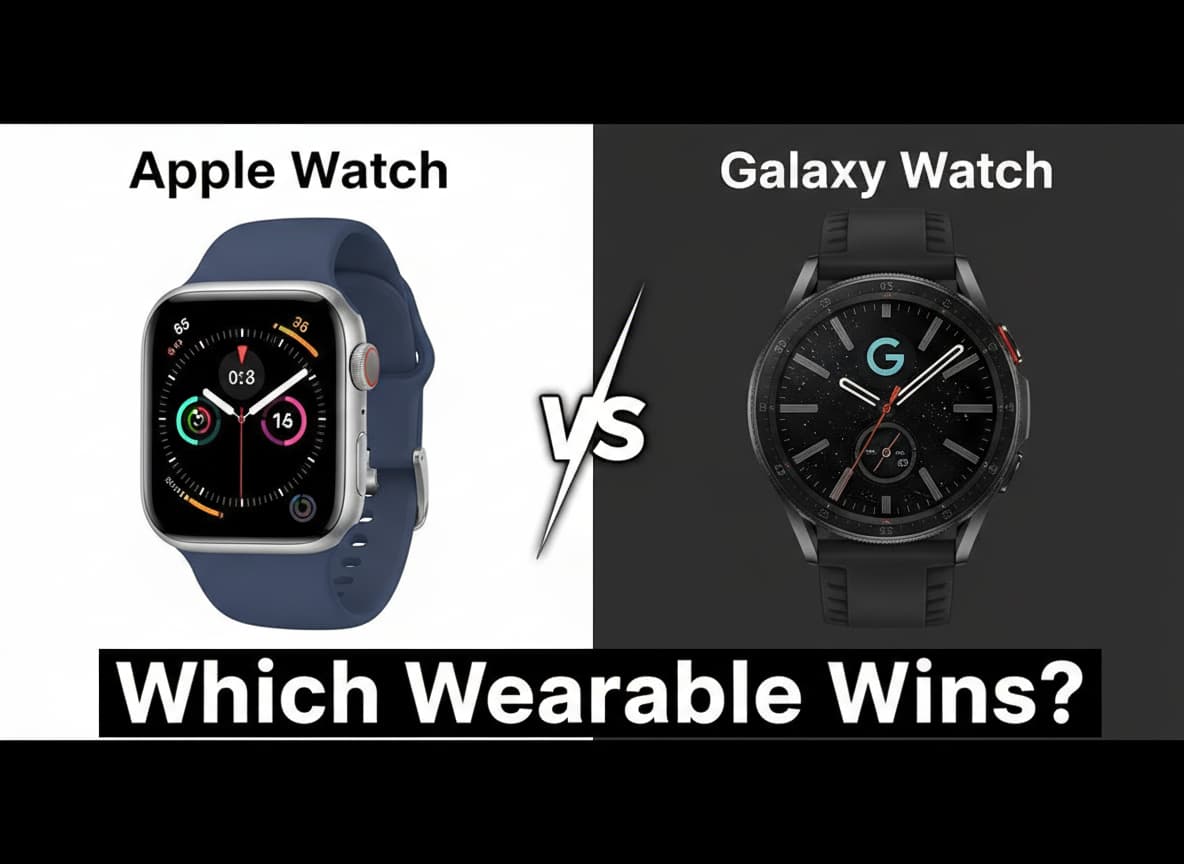
If you are looking for a new smartwatch in late 2025, you likely have two big names on your mind: the Apple Watch and the Samsung Galaxy Watch. These are the titans of the wearable world. For years, they have battled for the top spot on our wrists.
This year, the fight is closer than ever. Apple has released the Series 11 and a new Ultra 3, while Samsung has countered with the Galaxy Watch 8 and a refreshed Galaxy Watch Ultra. Both companies are promising better batteries, smarter health features, and faster chips.
But which one is actually better for you? This guide will break down the differences in simple terms. We will look at the design, the battery life, the health tools, and the price to help you pick the winner.
Design and Display: The Battle of Shapes
The most obvious difference between these two watches is how they look. This has not changed much over the years, but in 2025, both companies have refined their styles.
The Apple Look: Modern and Square
The Apple Watch Series 11 keeps its famous square shape. Some people love it; others prefer a traditional round watch. However, the square screen is very practical. It lets you see more text messages and emails without scrolling too much.
This year, Apple has made the Series 11 thinner and lighter. They are using a special 3D-printed titanium for some models, which makes them strong but not heavy. The screen is incredibly bright, reaching 2,000 nits, so you can read it easily even on a sunny beach. If you choose the bigger Ultra 3, you get a massive, rugged screen that hits 3,000 nits, perfect for outdoor adventures.
The Samsung Style: Classic and Round
Samsung takes a different path with the Galaxy Watch 8. It uses a circular face that looks more like a classic wristwatch. It feels familiar and stylish. If you wear a suit or dress up often, the Galaxy Watch might blend in better.
The screen is a “Super AMOLED” display, which is known for rich, colorful visuals. Like the Apple Watch Ultra, the top-tier Samsung screens can also get very bright, hitting that 3,000 nit mark. Samsung also offers an “Ultra” model with a rugged, cushion-shaped design that screams durability.
Winner: It is a tie. If you want a gadget that displays a lot of data, go Apple. If you want a classic watch look, go Samsung.
Battery Life: Finally, Less Charging
For a long time, owning a smartwatch meant charging it every single night. Both companies have worked hard to fix this annoyance.
Apple’s Big Leap
The Apple Watch Series 11 has surprisingly good battery life this year. Apple officially says it lasts 24 hours, but real-world tests show it can often go for over 40 hours with light use. This is a huge improvement. It means you can wear it all day, track your sleep at night, and still have power in the morning.
The Ultra 3 is even better. It is a battery beast that can last nearly two full days (around 45-49 hours) on a single charge.
Samsung’s Stamina
The Galaxy Watch 8 is also a strong performer. It generally lasts about 30 to 40 hours. It is reliable and will easily get you through a full day and night. The Galaxy Watch Ultra is the king here, often lasting up to 60 hours or more thanks to its large battery.
Winner: Apple Watch Series 11 wins for the standard model surprisingly, but Samsung wins if you buy the big Ultra version.
Health and Fitness: Your Wrist Doctor
This is where things get really interesting. Both watches want to save your life.
Apple’s New Tricks
The big news for the Apple Watch Series 11 is Hypertension Notifications. The watch monitors your body patterns and can alert you if it sees signs of high blood pressure. It does not give you a specific number like a doctor’s cuff, but it acts like a smoke detector, warning you to go get checked.
It also has a feature to detect Sleep Apnea, a condition where you stop breathing during sleep. Combined with its excellent heart monitoring and “Vitals” app, it is a comprehensive health guardian.
Samsung’s BioActive Sensor
Samsung uses a special BioActive Sensor on the Galaxy Watch 8. It can measure your body composition—like body fat and muscle percentage—just by touching the buttons. This is great for people tracking weight loss or muscle gain.
Samsung also has Sleep Apnea features and a unique “Energy Score” that uses AI to tell you how ready you are for the day. However, for features like blood pressure monitoring, you often need to calibrate the watch with a real cuff first, which can be a hassle.
Winner: Apple Watch for seamless, passive alerts (like hypertension). Samsung for active gym-goers who want body fat stats.
Performance and Brains: Speed vs. AI
Nobody likes a slow gadget. Fortunately, both watches are incredibly fast in 2025.
The Apple Watch runs on the new S10 chip. It is lightning fast. Apps open instantly, and animations are smooth. It also uses “Apple Intelligence” to do things like translate languages in real-time right on your wrist.
Samsung uses the Exynos W1000 chip. It is also very powerful and efficient. The big selling point here is Galaxy AI. It integrates deeply with Google services and can provide smart suggested replies to messages and summarize your health data.
Winner: Apple Watch. The S10 chip feels slightly smoother, and the software is generally more polished.
The Ecosystem Trap: The Real Deciding Factor
We have talked about specs, but there is one rule that matters more than anything else: Compatibility.
- If you have an iPhone: You pretty much must buy an Apple Watch. The Galaxy Watch does not work well with iPhones.
- If you have an Android (Samsung, Pixel, etc.): You must buy a Galaxy Watch (or another Android watch). The Apple Watch does not work with Android phones at all.
This “walled garden” means your choice is usually made for you by the phone in your pocket.
Comparison Table: Quick Look
| Feature | Apple Watch Series 11 | Samsung Galaxy Watch 8 |
| Case Shape | Square (Titanium/Aluminum) | Round (Armor Aluminum) |
| Screen Brightness | 2,000 nits | 2,000 – 3,000 nits |
| Battery Life | ~24-40 hours | ~30-40 hours |
| Key Health Feature | Hypertension Notifications | Body Composition (BIA) |
| Chip | S10 | Exynos W1000 |
| Starting Price | ~$399 | ~$300 – $350 |
The Verdict: Which One Wins?
If we look at the hardware alone, the Apple Watch Series 11 feels like a slightly more complete package this year. The jump in battery life was the final piece of the puzzle, fixing the biggest complaint people had. The new health features like hypertension alerts are genuinely useful for everyone, not just fitness buffs.
However, the Galaxy Watch 8 is an amazing value. It is often cheaper than the Apple Watch and offers a stylish, classic design that many people prefer.
Final Recommendation:
- Buy the Apple Watch Series 11 if you want the best all-around smartwatch experience, care about heart health alerts, and already own an iPhone.
- Buy the Galaxy Watch 8 if you want a watch that looks like a watch, care about tracking body muscle/fat, or use an Android phone.











Post Comment