Smart Cities: How Technology is Changing Urban Living
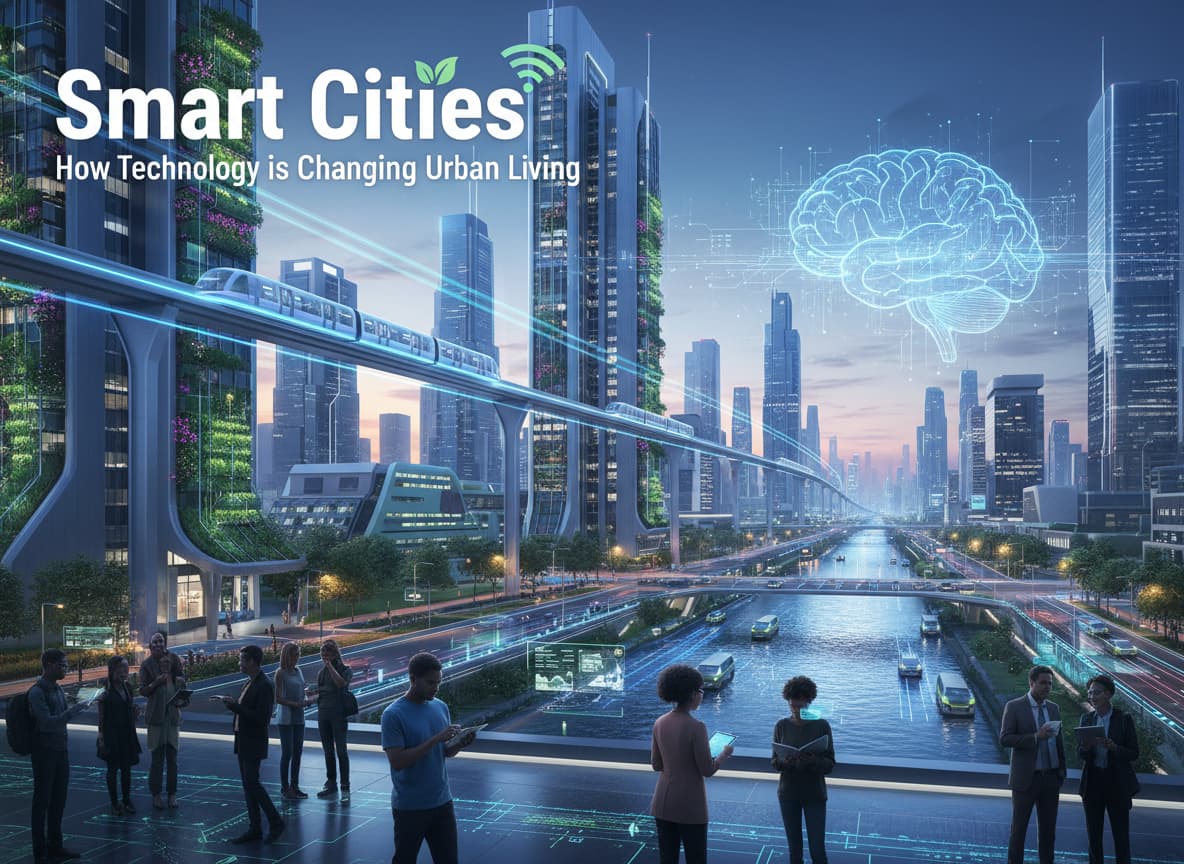
The world is urbanizing at a breakneck pace. By 2050, nearly 70% of the global population is expected to live in cities. This rapid growth presents massive challenges: overcrowding, pollution, traffic congestion, and strained public services. The solution isn’t just building more; it’s building smarter.
Enter the “smart city.” It sounds like science fiction, but it is already happening around us. In 2025, cities are no longer just concrete jungles; they are becoming living, breathing digital ecosystems.
In this article, we will explore what a smart city actually is, how technology is reshaping our daily lives, and the real-world examples that are leading the charge into the future.
What Exactly is a Smart City?
A smart city is not just a city with free Wi-Fi. It is an urban area that uses different types of electronic methods and sensors to collect data. Insights gained from that data are used to manage assets, resources, and services efficiently.
At its core, a smart city relies on three main pillars:
- IoT (Internet of Things): This is the network of physical devices—vehicles, home appliances, and street sensors—that connect and exchange data.
- AI (Artificial Intelligence): AI analyzes the massive amounts of data collected by IoT devices to make real-time decisions, like changing traffic lights or routing emergency vehicles.
- Connectivity: High-speed internet (5G and 6G) acts as the nervous system, allowing all these devices to talk to each other instantly.
The 2025 Trends: How Tech is Changing Your Life
The technology in smart cities isn’t just for show; it directly impacts how citizens live, work, and play. Here are the biggest trends shaping urban living right now.
1. Smart Transportation and Mobility
Traffic jams might soon be a thing of the past. In a smart city, traffic lights don’t just run on a timer; they “see” the traffic. Intelligent Transport Systems (ITS) use cameras and sensors to analyze flow and adjust signals in real-time to clear congestion.
- Connected Vehicles: Cars communicate with traffic lights and each other to avoid accidents and find parking spots automatically.
- Smart Public Transit: Buses and trains track passenger numbers in real-time. If a bus is too full, the system automatically sends another one to handle the load.
2. Sustainable Energy and Environment
Smart cities are the leaders in the fight against climate change.
- Smart Grids: These energy networks can balance power loads intelligently. If a neighborhood is using less power, the grid automatically redirects that energy to an industrial area that needs it.
- Smart Streetlights: Lights that dim when no one is around and brighten when a pedestrian approaches. This simple change saves cities millions of dollars and reduces light pollution.
- Waste Management: Garbage bins now have sensors that tell trucks when they are full. This stops trucks from driving to empty bins, saving fuel and reducing traffic.
3. Public Safety and Security
Safety is a top priority. Smart cities use AI-powered surveillance to detect accidents or crimes instantly. For example, a “shot spotter” system can detect the sound of a gunshot and instantly alert police to the exact location. In 2025, predictive policing uses data to identify high-risk areas, allowing law enforcement to be proactive rather than reactive.
Real-World Examples: Cities Leading the Way
Smart cities are not a theoretical concept; they are here.
- Singapore: Often called the “smartest city in the world,” Singapore uses a digital twin—a virtual replica of the entire city—to test new ideas before building them. They monitor everything from water cleanliness to crowd density in real-time.
- Copenhagen, Denmark: This city aims to be carbon-neutral by 2025. It uses smart data to prioritize bicycles over cars, giving cyclists green lights (“Green Waves”) during rush hour to encourage eco-friendly travel.
- Zurich, Switzerland: Known for its smart building management. Buildings here heat and cool themselves automatically based on occupancy sensors, drastically reducing energy waste.
The Challenges: Privacy and The Digital Divide
While the benefits are clear, the rise of smart cities brings serious concerns that we cannot ignore.
Privacy and Surveillance To work effectively, a smart city needs data—your data. Cameras track your face, sensors track your car, and your phone tracks your location. Citizens are rightly worried about “Big Brother” watching their every move. In 2025, data privacy laws are becoming stricter to ensure that city governments protect this sensitive information.
The Threat of Hacking If a city is connected, it can be hacked. Cybersecurity is a massive challenge. A hacker could potentially turn off power grids, mess with traffic lights, or contaminate water supplies. Smart cities must invest heavily in digital security to prevent these “cyber-physical” attacks.
Digital Inclusion Not everyone has a smartphone or high-speed internet. There is a risk that smart cities will only benefit the wealthy and tech-savvy, leaving the poor and elderly behind. True smart cities must ensure that technology is accessible to everyone, regardless of income or age.
Conclusion
Smart cities represent the next evolution of human civilization. By integrating IoT, AI, and sustainable practices, we are building urban environments that are cleaner, safer, and more efficient.
However, technology is just a tool. The success of a smart city depends on how we use it. We must balance innovation with privacy, ensuring that these digital utopias serve all citizens, not just a privileged few. The city of the future is not just smart; it must also be human.












Post Comment