How Deepfakes Are Changing the Internet Landscape
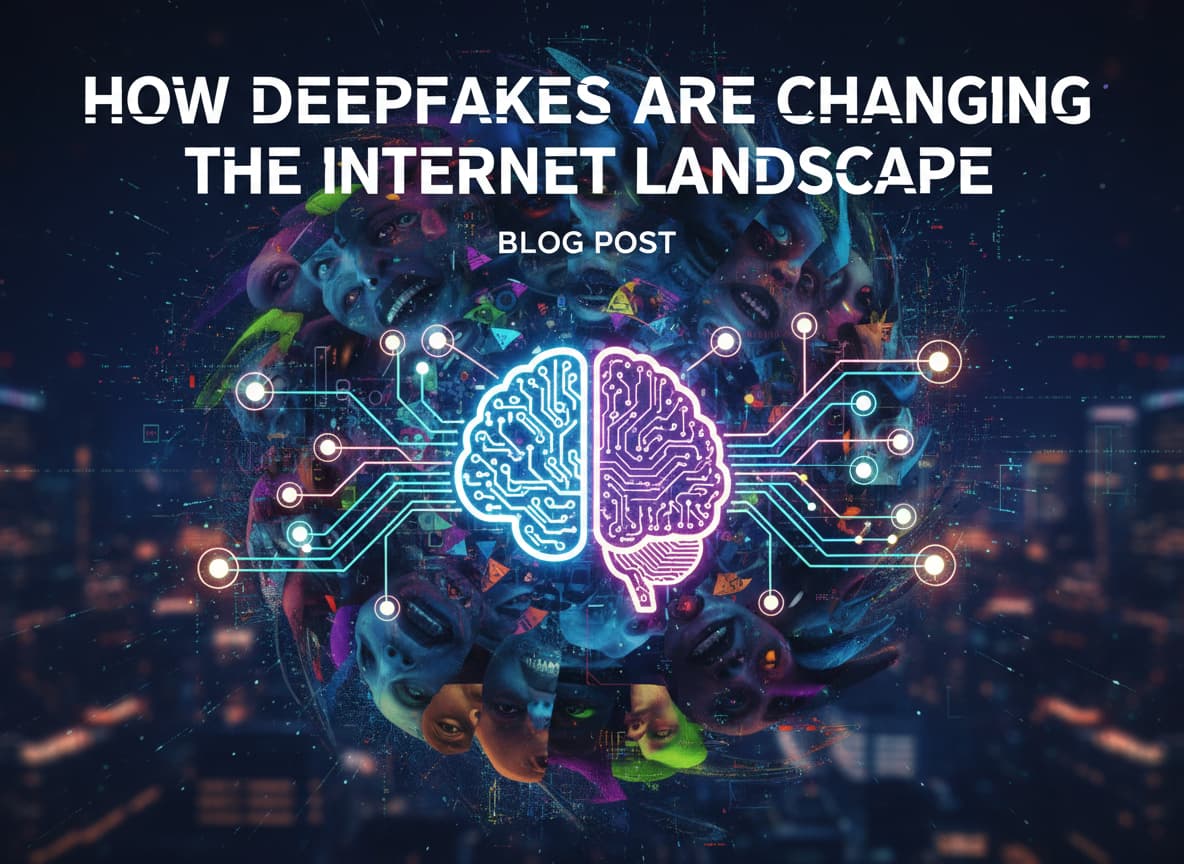
The internet has always been a place where reality and fiction blur, but in 2025, the line has all but vanished. Deepfakes—highly realistic videos, audio, and images created by artificial intelligence—are no longer just a novelty or a tool for movie studios. They have become a fundamental part of the online experience, reshaping everything from social media trends and entertainment to cybercrime and political discourse.
As we move deeper into this new era, it is essential to understand how deepfake technology is changing the internet landscape, the risks it poses, and the ways we can navigate a world where seeing is no longer believing.
The Rise of “Synthetic Reality” in 2025
By late 2025, deepfake technology has democratized. What once required expensive computers and technical expertise can now be done with a smartphone app in seconds. This accessibility has led to an explosion of “synthetic reality” across the web.
Social Media and Entertainment On platforms like TikTok and Instagram, deepfakes have birthed entirely new genres of content. We see “virtual influencers” who look and act human but are entirely AI-generated, gathering millions of followers. Parody accounts use deepfakes to make celebrities say ridiculous things, blurring the line between satire and misinformation.
- Positive Spin: Creators are using deepfakes to “collab” with younger versions of themselves or bring historical figures to life for educational videos.
- The Shift: Users are becoming more skeptical. The default assumption for viral videos is shifting from “this happened” to “is this real?”
The “Dead Internet” Theory Acceleration The proliferation of deepfakes contributes to the “Dead Internet Theory”—the idea that a significant portion of web content is bot-generated. With AI capable of generating endless streams of realistic fake people, comments, and videos, genuine human interaction is becoming a premium commodity.
The Dark Side: Misinformation and Cybercrime
While the creative potential is vast, the dangers are immediate and severe. Deepfakes have armed bad actors with powerful new weapons.
Political Manipulation and Disinformation 2024 and 2025 have seen a surge in political deepfakes. We aren’t just talking about fake videos of candidates giving speeches. We are seeing:
- Fabricated Scandals: AI-generated audio clips of politicians allegedly admitting to crimes or using slurs released just days before an election.
- Micro-Targeting: Bots generating thousands of unique, personalized video messages from “candidates” to send to individual voters, creating a false sense of personal connection.
- Erosion of Trust: Perhaps the biggest damage is the “Liar’s Dividend.” Politicians caught in real scandals can now easily claim genuine evidence is “just a deepfake,” and the public, confused by the technology, may believe them.
The New Face of Cybercrime Hackers have leveled up. “CEO Fraud” has evolved from phishing emails to deepfake video calls.
- The $25 Million Heist: In a landmark case, a finance worker was tricked into transferring $25 million after attending a video call where the CFO and several colleagues were all deepfakes.
- Voice Cloning Scams: Scammers now scrape audio from social media videos to clone a person’s voice. They then call that person’s grandparents, sounding terrified and asking for money for an “emergency.”
Non-Consensual Intimate Imagery (NCII) The most widespread and damaging use of deepfakes remains the creation of non-consensual sexual content. This overwhelmingly targets women, from celebrities to private individuals. Laws are struggling to keep up, often leaving victims with little recourse as their digital likeness is stolen and abused.
The Good News: Positive Applications
It is not all doom and gloom. When used ethically, deepfake technology is revolutionizing industries.
Hollywood and Accessibility The film industry uses deepfakes to de-age actors without uncanny CGI or to dub movies into other languages. Imagine watching a French movie where the actors’ lips actually move in sync with the English dub—that is happening now.
- Personalized Education: Educational platforms use AI avatars to deliver lessons in hundreds of languages, making high-quality education accessible to remote regions.
- Medical Training: Deepfakes generate realistic “patients” with specific symptoms for doctors to practice diagnoses, improving medical training without needing human actors.
Fighting Back: The Technology of Truth
As the sword gets sharper, the shield gets stronger. In 2025, a new industry of “Deepfake Detection” has emerged.
Watermarking and “Content Credentials” Major tech companies like Adobe, Google, and Meta have adopted the C2PA standard—a “digital nutrition label” for content. This metadata proves where an image came from and if AI was used to edit it. Social media platforms now automatically label AI-generated content if it bears these digital watermarks.
The Arms Race of Algorithms Security firms like Pindrop are deploying advanced detection tools for businesses. These systems analyze “liveness” signals in real-time video calls—subtle changes in blood flow color in the skin or micro-reflections in the eyes that current AI struggles to replicate perfectly.
Legislative Action Governments are finally stepping in.
- The “Take It Down” Act: New US federal laws signed in 2025 make it a crime to publish non-consensual AI porn and require platforms to remove it within 48 hours.
- EU AI Act: Europe has implemented strict transparency rules, forcing creators to disclose when content is artificially manipulated.
Navigating the Future Landscape
The internet of 2025 requires a new set of survival skills. “Digital Literacy” now means understanding the capabilities of AI.
How to Spot a Deepfake in 2025:
- Look for “Glitches”: AI still struggles with physics. Look at shadows, reflections in glasses, or how hair moves.
- Listen for “Flatness”: AI voices often lack the natural breath pauses and emotional variation of a stressed or excited human.
- Check the Source: Does the video exist on a reputable news site, or is it only circulating on social media?
- Use Verification Tools: Browser extensions are now available that can flag potential deepfakes in your feed.
Conclusion Deepfakes are not “ruining” the internet, but they are fundamentally changing it. They are forcing us to abandon the age-old adage that “seeing is believing.” The internet landscape of the future will be built on verification, trust, and skepticism. We are moving from an open web of free information to a “web of trust,” where the source of the content matters more than the content itself.
The technology is here to stay. Whether it becomes a tool for creativity or a weapon of deception depends on how quickly we adapt our laws, our technology, and our own critical thinking.










Post Comment