Note-Taking Strategies That Make Revision Faster and Easier
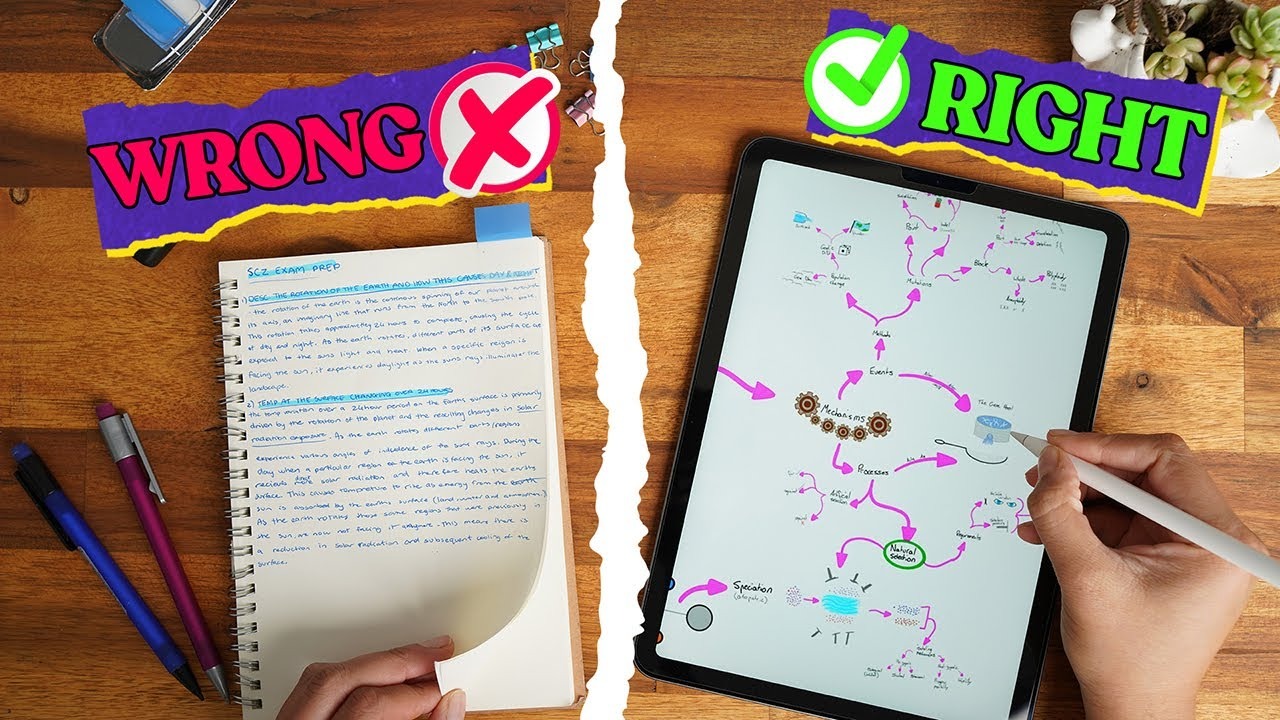
The secret to a fast and easy revision is not to just reread your notes. It is to take your notes in a way that is specifically designed for revision. Good notes are a powerful tool that can help you to remember information faster, to feel more confident, and to get a better grade on your exam. In this article, we will take a deep dive into note-taking strategies that make revision faster and easier. We will explore a few simple methods that are proven to work and a few tips on how to make your notes a powerful tool for your learning.
Why Your Notes Are Your Best Revision Tool
Many students think that the goal of note-taking is just to write down what the teacher says. But the real purpose of notes is to help you to revise for an exam. Your notes are a summary of a course. They are a record of all the important ideas, all the key terms, and all the important facts. A good set of notes is a much better tool for revision than a long, detailed textbook.
Good notes can help you to:
- Save Time: Good notes are a summary of a course. You don’t have to read a long textbook again. You can just read your notes.
- Organize Your Thoughts: Good notes are a way to organize your thoughts. They help you to see the big picture and to understand the connections between different ideas.
- Improve Your Memory: Good notes are a way to improve your memory. When you take notes in a smart way, you are creating a stronger connection to the information in your brain.
- Reduce Stress: When you have a good set of notes, you feel more in control. You know that you have all the information you need for your exam, which can help to reduce stress.
The strategies that we will talk about are not a magic trick. They are a set of simple things that you can do to make your revision faster and easier.
Strategy 1: The Cornell Method (Organized for Active Review)
The Cornell Method is one of the most famous and effective note-taking methods. It is a simple system that helps you to organize your notes and to review them in a very effective way.
Here is how the Cornell Method works:
- Divide your page. You draw a line down the page, about two and a half inches from the left side. You also draw a line at the bottom of the page, about two inches from the bottom. This will divide your page into three sections.
- The main note-taking area. The biggest section on the right side of the page is where you take your notes. You should write down the main ideas, the important points, and any new words.
- The cue column. The small section on the left side of the page is where you write down keywords, questions, or ideas that are related to your notes. This will be your main tool for reviewing.
- The summary section. The section at the bottom of the page is where you write a short summary of the main ideas of the page. This summary should be written in your own words.
The Cornell Method is great for a quick review. You can cover up the main note-taking area and try to answer the questions in the cue column. This is a very effective way to test yourself and to make sure that you remember the information.
Strategy 2: The Mind Map Method (Visual and Quick to Scan)
The Mind Map Method is a great way to take notes if you are a visual learner. It is a creative and non-linear way to organize your ideas.
Here is how the Mind Map Method works:
- Start with the main idea. You write down the main idea or the topic of the class in the center of the page. You can put it in a circle or a box.
- Branch out. You then draw lines, or “branches,” from the main idea. On each branch, you write down a main idea that is related to the central idea.
- Use keywords and pictures. You use keywords and pictures to represent the ideas. You should not write in complete sentences. You should use different colors to make your mind map more interesting and easier to remember.
The Mind Map Method is great for a quick scan. You can look at the mind map and you can see all the main ideas and the connections between them in a short amount of time.
Strategy 3: The Outline Method (Clear and Structured)
The Outline Method is a very simple and logical way to take notes. It is a great method for students who like to have a clear and organized structure for their notes.
Here is how the Outline Method works:
- Start with the main idea. You write down the main idea or the topic of the class at the top of the page.
- Use headings and bullet points. You use headings, subheadings, and bullet points to organize your notes. This is a way to show the relationship between the different ideas.
The Outline Method is great for seeing the big picture of a lecture. It helps you to know what the main points are and how they are related to each other. You can also use the outline to create a summary of the main ideas.
Strategy 4: The Boxing Method (Easy to Organize and Connect Ideas)
The Boxing Method is a new and very effective way to take notes. It is a great method for students who have a hard time organizing their notes. The idea is simple: you divide your page into boxes, and each box has a main idea.
Here is how the Boxing Method works:
- Draw boxes. You draw a series of boxes on your page. You can make the boxes of different sizes.
- Put a main idea in each box. Each box has a main idea or a topic. You write all the notes that are related to that idea in the box.
- Connect the boxes. After you have taken all your notes, you can draw lines between the boxes to show how the different ideas are connected.
The Boxing Method is great for a quick review. You can look at the boxes and you can see all the main ideas and the connections between them in a short amount of time.
Strategy 5: The Q&A Method (Learning by Asking Questions)
The Q&A Method is a great way to take notes that is also a great way to study for an exam. The idea is to turn your notes into a series of questions and answers. This is a way to actively learn and to test yourself as you go.
Here is how the Q&A Method works:
- Turn a topic into a question. You take a main idea from a lecture and you turn it into a question. For example, if the topic is “The Solar System,” you can write, “What are the planets in the solar system?”
- Write the answer. You then write the answer to the question in your notes.
- Create a question column. You can use a separate column on your page to write down all the questions. You can then use this column to test yourself.
The Q&A Method is a great way to learn by asking questions. It helps you to be a more active learner and to make sure that you understand the information.
Tip 1: Use Abbreviations and Symbols
A personal system of abbreviations and symbols is a great way to make note-taking faster. You don’t have to write in complete sentences. You can use a few simple abbreviations to write down the main ideas and the important points.
You can use:
- An arrow to show a cause-and-effect relationship.
- A star to show an important point.
- A plus sign to show an addition.
- A minus sign to show a subtraction.
A personal system of abbreviations will help you to be a more efficient note-taker.
Tip 2: Use Colors and Highlighters
Colors are a great way to make your notes more organized and more interesting. You can use a different color for each new topic or for a different type of information.
- For main ideas: You can use a bright color for the main ideas.
- For new words: You can use a different color for all the new words.
- For important points: You can use a highlighter to highlight the most important points.
Colors will help you to see the information in a new way and will make your notes easier to read and to review later.
Tip 3: The Power of a Summary
A summary at the end of each page of notes is a great way to make revision faster and easier. A summary is a short description of the main ideas of the page. You should write the summary in your own words.
When you write a summary, you are forcing your brain to process all the information and to decide what is most important. A summary will be your main tool for revision. You can read a summary and you will remember all the main ideas of the page.
Tip 4: Review Your Notes Regularly
Taking notes is only half of the work. The other half is reviewing them. When you learn something new, your brain only keeps it for a short time. If you do not review the information, your brain will forget it.
The best way to make sure that you remember the information is to review your notes regularly. You should try to review your notes right after a class. This will help you to remember the information while it is still fresh in your mind. You should also review your notes every day or every week. This will help to move the information from your short-term memory to your long-term memory.
Tip 5: Don’t Just Read, Be an Active Learner
When you revise for an exam, you should not just read your notes over and over again. This is a very passive way to learn. You should be an active learner. An active learner is a person who is constantly using their brain to process the information.
- Ask questions. You should ask questions about the information in your notes.
- Teach someone else. You can try to explain the information in your notes to a friend or to your family.
- Create a quick quiz. You can create a quick quiz for yourself with the main ideas of your notes.
Conclusion
Note-taking strategies are a crucial part of a student’s learning and growth. They are a tool that can help you to be a more active and a more effective learner. In this article, we have taken a deep dive into note-taking strategies that make revision faster and easier. By using the Cornell Method, the Mind Map Method, and the Boxing Method, you can make your notes a powerful tool for your learning. You should also remember to use colors, symbols, and a summary to make your notes easier to read and to review later. With these strategies, you will be able to make revision a less stressful and a more effective part of your studies.











Post Comment