The Global Chip Shortage: Is It Finally Over?
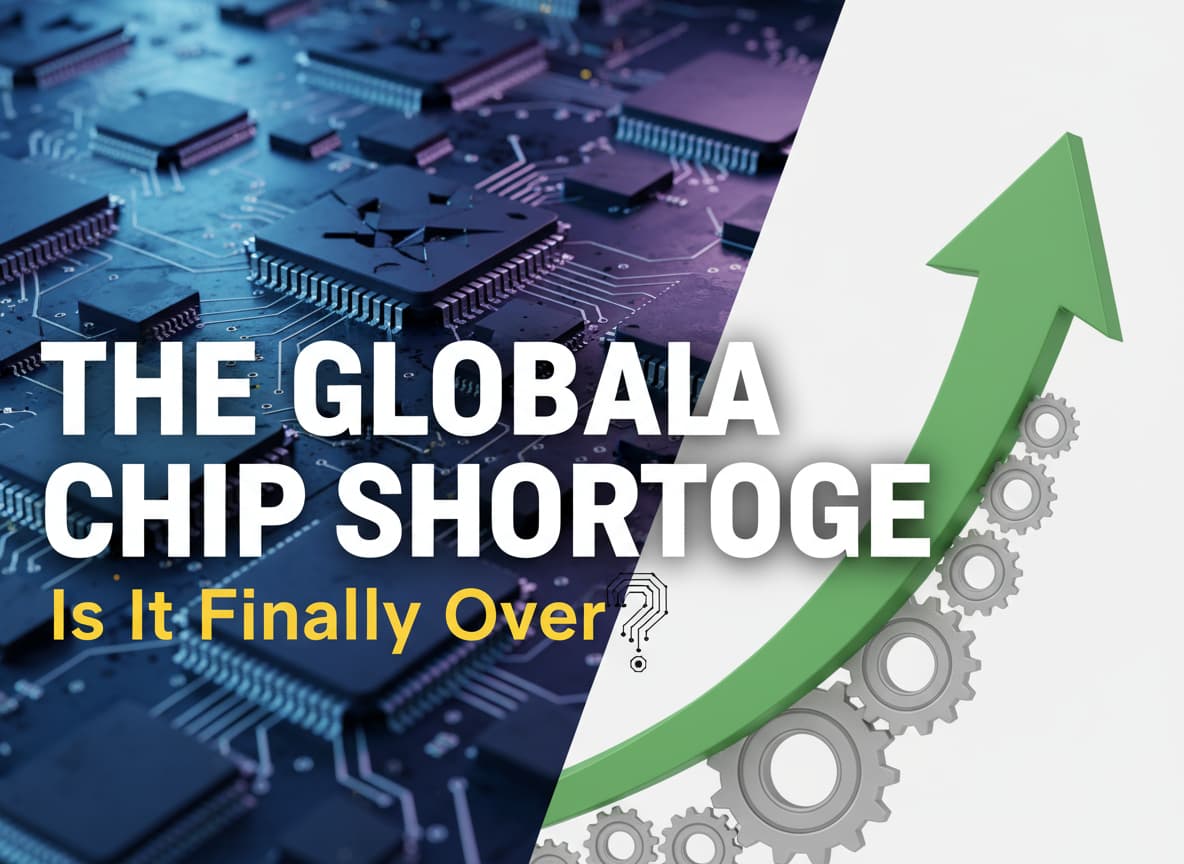
For the last four years, the world has been waiting for one piece of good news: the end of the chip shortage.
We all remember the chaos of 2020 and 2021. You couldn’t buy a PlayStation 5. Car dealerships were empty. Even washing machines were back-ordered for months. It felt like the world ran out of technology.
Now, in 2025, you might look around and think, “It looks normal again.” You can walk into a store and buy a laptop. Car lots are full.
But if you look closer, there are cracks in the system. Prices for new phones are rumored to go up. Artificial Intelligence (AI) companies are fighting over supplies. And major factories that were supposed to save us have been delayed.
So, is the chip shortage finally over?
The short answer is: Yes and No. The “Everything Shortage” is gone, but it has been replaced by a new, more specific crisis.
Here is exactly what is happening in the world of chips in 2025.
The Good News: The “General” Shortage is Dead
First, let’s look at the positive side. The days of waiting six months for a basic laptop or a microwave are over.
During the pandemic, every industry ran out of chips at the same time. That was a once-in-a-lifetime disaster. Today, the supply chain for “everyday chips” has healed.
Why It Got Better
- Cooling Demand: People stopped buying as many PCs and tablets after they finished setting up their home offices. This gave manufacturers time to catch up.
- Inventory Build-Up: Companies like Dell, HP, and Toyota spent years hoarding chips so they wouldn’t run out again.
- Supply Chain Fixes: Shipping ports are no longer clogged, and factories are running at full speed for standard parts.
If you need a standard computer for school or work, you can buy one today without any trouble.
The Bad News: The “AI Squeeze” is Here
Just as we fixed the old problem, a new one appeared. It has a name: The AI Supercycle.
In 2025, every major company in the world is trying to build Artificial Intelligence. To do that, they need massive data centers filled with powerful chips (GPUs). But these chips don’t work alone. They need incredible amounts of Memory Chips (DRAM).
This has created a new shortage that affects you, not just tech giants.
The Memory Crisis
AI servers are eating up the world’s supply of high-speed memory. Manufacturers like Samsung and SK Hynix are shifting their factories to make chips for AI because it pays better.
This leaves fewer memory chips for smartphones and gaming consoles.
What This Means for You
- Higher Phone Prices: Rumors suggest the iPhone 17 and Samsung Galaxy S26 could see price hikes this year. It’s not because the screen is better; it’s because the memory inside costs more to make.
- Gaming Consoles: Microsoft and Sony are struggling to get enough RAM for their consoles. This is why you might hear rumors about supply issues for the Xbox or the PS5 Pro. They are competing with AI companies for the same parts.
The Automotive Sector: Bottleneck 2.0
Car buyers have had a tough few years. While the worst is over, 2025 has brought a strange new problem called “Microchip Bottleneck 2.0.”
Modern cars use two types of chips:
- Advanced Chips: For self-driving features and fancy screens.
- Mature Chips: Simple chips for rolling down windows, moving seats, and braking.
Believe it or not, we have enough advanced chips. We are running out of the simple ones.
The “Placeholder” Car
Because simple chips are cheap (and not very profitable), chip factories don’t want to build new machines to make them. They want to build expensive AI chips instead.
This has led to a situation where you can buy a new SUV in 2025, but it might be missing features. You might find a “blank button” on the dashboard where a heated seat or a lane-assist feature should be. Dealers call these “placeholder” cars—vehicles shipped with missing tech just to get them on the road.
The “Construction Boom” (That Is Actually a Delay)
You might be thinking, “Didn’t the government pay billions of dollars to build new chip factories?”
Yes, they did. The US CHIPS Act and similar laws in Europe and Japan promised a wave of new factories (“Fabs”) to fix our problems. But building a chip factory is harder than building a house.
2025 was supposed to be the year of the new Fabs. Instead, it is the year of delays.
Major Delays to Watch
- Intel in Ohio: This massive $20 billion project was supposed to start making chips in 2025. Now, mass production has been pushed back to 2030 or 2031.
- Samsung in Texas: The Taylor, Texas factory has also faced delays. Mass production for their advanced chips might not happen until 2026.
- TSMC in Arizona: This project has faced labor shortages and is running behind schedule.
The Bright Spots
It is not all bad news.
- Japan: A new factory by TSMC (Fab 1) in Kumamoto is already running, and a second one starts construction late this year.
- China: Manufacturers like SMIC are building four massive factories. While they can’t make the cutting-edge AI chips due to US restrictions, they can make the simple chips that cars need. This might save the automotive industry in late 2025.
Summary: What to Expect for the Rest of 2025
The global chip shortage hasn’t ended; it has evolved. We have moved from a “Panicked Shortage” (where we had nothing) to a “Strategic Shortage” (where we have the basics, but the good stuff is expensive).
Here is your cheat sheet for navigating tech in 2025:
| Product Category | Status | Advice |
| Laptops & PCs | Available | Safe to buy. Prices are stable for now. |
| Smartphones | Getting Pricey | Buy now if you can. Next year’s models may cost more due to memory prices. |
| Gaming Consoles | Tight Supply | Don’t wait for holiday sales. Stock might dip due to RAM shortages. |
| Cars | Mixed | Check the features list carefully. Ensure your new car isn’t missing “standard” tech. |
The era of empty shelves is over. But the era of paying a little more for your favorite gadgets is just beginning.













Post Comment