The Right to Repair Movement: What It Means for Consumers
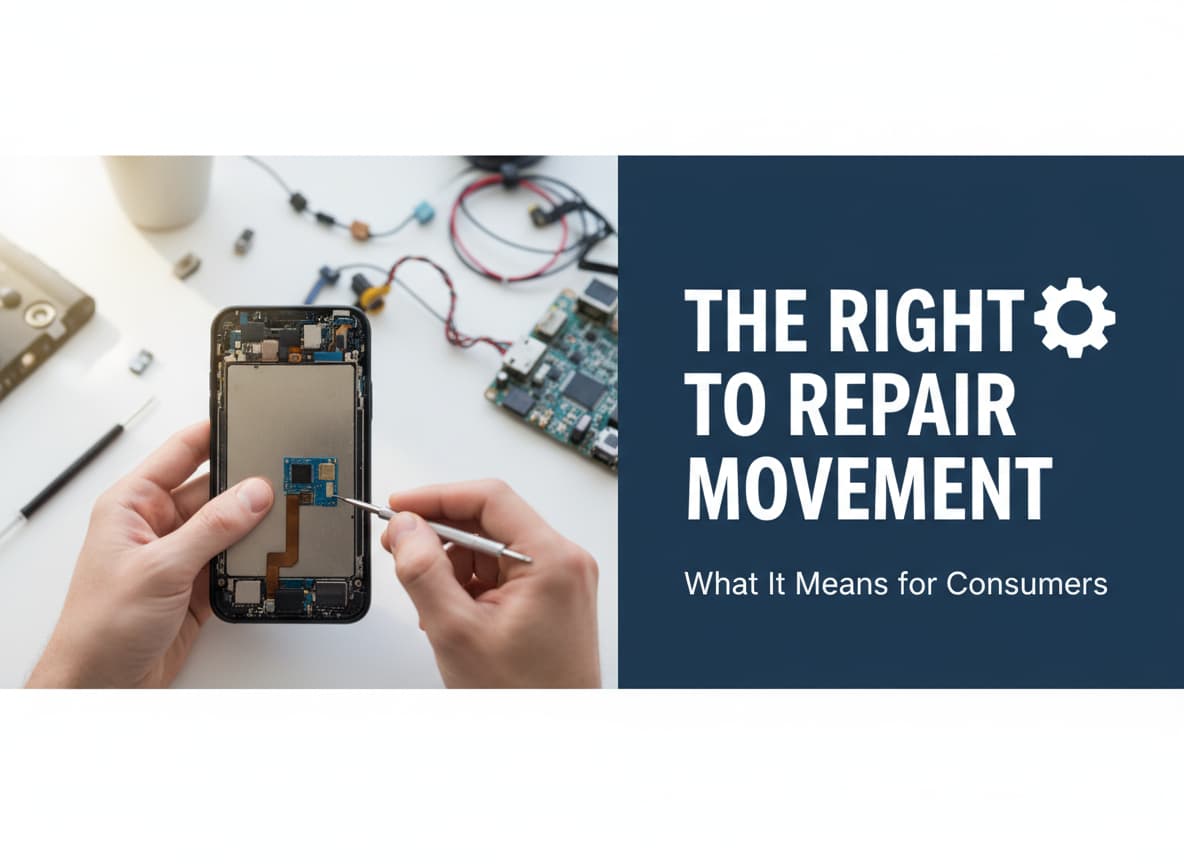
Have you ever dropped your smartphone and watched the screen shatter into a spiderweb of cracks? It is a sinking feeling. But what happens next is often worse. You go to the manufacturer, and they tell you it will cost almost as much as a new phone to fix it. Or maybe they say it cannot be fixed at all.
For years, this has been the reality for millions of people. We have been forced into a cycle of “buy, break, replace.” But a global change is happening. It is called the Right to Repair movement.
In 2024 and 2025, this movement has scored massive victories. New laws are forcing big companies like Apple, Samsung, and Google to change their ways. This article will explain what the Right to Repair is, why it matters to your wallet and the planet, and how you can take advantage of these new rights today.
What is the Right to Repair?
In simple terms, the Right to Repair is the idea that if you own a device, you should be allowed to fix it.
It sounds obvious, right? If you buy a bicycle and the tire goes flat, you can buy a new tube and fix it yourself. You do not need to take it back to the bicycle factory. But for modern electronics—like phones, laptops, and even tractors—manufacturers have made this very difficult.
They have used special screws that no normal screwdriver can open. They have glued batteries inside the device so you cannot remove them. Worst of all, they have used software to “lock” parts together. This means even if you replace a broken screen with a genuine new screen, the phone might reject it because it was not “paired” by the manufacturer’s special software.
The Right to Repair movement fights for three main things:
- Access to Parts: Companies must sell spare parts (like batteries and screens) to everyone, not just their own shops.
- Access to Tools: Companies must sell the special screwdrivers and tools needed to open the device.
- Access to Manuals: Companies must publish the instructions on how to fix the device safely.
Why Is This Happening Now?
Three major problems have pushed governments to act.
1. The E-Waste Crisis
We are drowning in electronic waste. Every year, the world throws away millions of tons of gadgets. Because it is so hard to fix a broken phone, people just throw it away and buy a new one. This creates toxic waste that harms the environment. By making repairs easier, we can keep our devices for 5 or 7 years instead of just 2.
2. Rising Costs
Technology is getting expensive. A new flagship phone can cost over $1,200. During difficult economic times, most families cannot afford to buy a new laptop every time a keyboard key breaks. Repairing is almost always cheaper than replacing.
3. The “Parts Pairing” Monopoly
This was the final straw for many lawmakers. Manufacturers were using software to kill the independent repair business. If a local shop fixed your phone, features like Face ID or the camera might stop working, even if they did a perfect job. This forced customers to pay the manufacturer’s high prices.
The Legal Wins of 2024 and 2025
Recently, the tide has turned. Several U.S. states (like California, New York, Oregon, and Colorado) and the European Union have passed strict new laws.
The biggest win came from Oregon and Colorado. They were the first to ban “parts pairing.” This means manufacturers can no longer use software to block you from using third-party or used parts.
What does this mean for you?
- You can use second-hand parts: You can now take a screen from a dead phone and put it on your broken phone, and it must work.
- No more annoying warnings: Your phone should not constantly pop up with scary messages saying “Unknown Part Detected” just because you fixed it yourself.
Big Tech’s Reaction: A Mixed Bag
The big tech giants fought these laws for years, but now they are forced to adapt. Here is how the major players are responding in 2025.
Apple: A Major Shift
Apple used to be the hardest company to repair. But recently, they have made big changes.
- Used Parts: In late 2024, Apple started allowing customers to repair their iPhones with used genuine parts. This is huge for cost savings.
- Repairability Scores: The new iPhone 16 Pro Max scored a 7 out of 10 on the “iFixit” repair scale. This is much better than older models. They have made the battery easier to remove without dangerous glue.
- The Catch: Apple still uses “Activation Lock” on parts. If you try to use a battery from a stolen iPhone, it will not work. This is good for stopping theft, but it adds a step to the repair process.
Samsung: Two Steps Forward, One Step Back
Samsung has expanded its self-repair program. You can now buy parts for many Galaxy phones and laptops directly from their partners like Encompass.
- The Good: The Galaxy S25 Ultra has a battery with a “pull tab.” This means you can pull it out by hand without needing heat or chemicals.
- The Bad: They still glue the screen to the frame very tightly. Fixing a cracked screen on a Samsung phone is often harder than on an iPhone because you have to replace the whole frame or carefully heat the glass.
Google: The Software Champion
Google has introduced a clever feature called “Repair Mode” for Pixel phones.
- Privacy First: In the past, you had to wipe your phone before sending it for repair to keep your photos safe. With Repair Mode, you lock your personal data away, so the repair technician can test the phone without seeing your files.
- Long Support: Google now promises 7 years of spare parts availability for their newer phones.
The Benefits for You (The Consumer)
So, why should you care about all this legal drama? Because it directly improves your life in three ways.
1. You Save Money
This is the most immediate benefit.
- Scenario: Your battery dies after 2 years.
- Old Way: Buy a new phone for $800.
- New Way: Buy a battery for $40 and a tool kit for $10. Watch a YouTube video and fix it in 30 minutes. You just saved $750.
2. Your Device Has a Higher Resale Value
In the past, a phone with a cracked back glass was almost worthless because it cost so much to fix. Now that repairs are cheaper and easier, you can fix up your old devices and sell them for a good price when you upgrade.
3. You Control Your Data
Sending your phone away for repair is scary. You don’t know who is looking at your photos. By doing a simple repair yourself (like changing a battery or screen), your device never leaves your house. Your data stays 100% private.
How to Start Repairing Your Own Stuff
Repairing electronics sounds scary. You might think you need an engineering degree. You don’t. Modern repair is a lot like building a LEGO set. You just follow the instructions.
Step 1: Diagnose the Problem
Is your phone not charging? It might just be a dirty port. Is the battery draining fast? Check the battery health settings. Make sure you know what is broken before you buy parts.
Step 2: Find a Guide
Do not guess! Go to websites like iFixit. They are the gold standard for repair guides.
- They have step-by-step photos.
- They tell you exactly how hard the repair is (Easy, Medium, or Hard).
- They list every tool you need.
Step 3: Buy the Right Parts
This is crucial. Do not buy the cheapest part you find on a random website. Cheap batteries can catch fire, and cheap screens look terrible.
- Trusted Sources: Buy from iFixit, Mobileparts.shop, or the manufacturer’s official self-repair store (Apple Self Service Repair, Samsung Parts).
- Look for “OEM”: This stands for “Original Equipment Manufacturer.” It means the part is the same quality as the one that came with your phone.
Step 4: Get the Right Tools
You cannot use the screwdriver from your garage. Electronics use tiny, specific screws.
- The Essentials: You need a precision screwdriver set (with bits like Torx and Pentalobe), a suction cup (to lift the screen), and a “spudger” (a plastic stick to pry things open safely).
What to Look for When Buying New Gadgets
The best repair is the one you don’t have to stress about. When you are shopping for a new phone or laptop in 2025, look for these “Repair-Friendly” signs:
1. The Repairability Score: France and now other regions display a score from 1 to 10 on the box. Look for a device with a score of 7 or higher.
2. Modular Design: Some devices, like the Fairphone or the Framework Laptop, are built to be taken apart. You can swap every single part of these devices with just one screwdriver. They are the ultimate eco-friendly choice.
3. Battery Accessibility: Ask the salesperson or check a review: “Does the battery have pull tabs?” If the battery is glued in, it will be a nightmare to replace in 3 years.
4. Software Support: Do not buy a phone that only gets 2 years of updates. Look for brands promising 5 or 7 years. There is no point in fixing a phone if the software becomes unsafe to use.
Conclusion: The Power is in Your Hands
The Right to Repair movement is not just about screws and glue. It is about ownership. For too long, we have effectively been “renting” our devices from companies that dictate when we should upgrade.
With the new laws in 2025 and the tools available today, you have the power to take control. The next time your battery dies or your screen cracks, don’t panic. Don’t rush to the store to spend $1,000.
Take a breath. Look up a guide. Order a part. You might be surprised at how satisfying—and money-saving—it is to bring your dead tech back to life with your own two hands. The future of technology is not just about the newest, shiniest gadget; it is about making the amazing tech we already own last longer.













Post Comment