Wearable Health Tech: Beyond Counting Steps
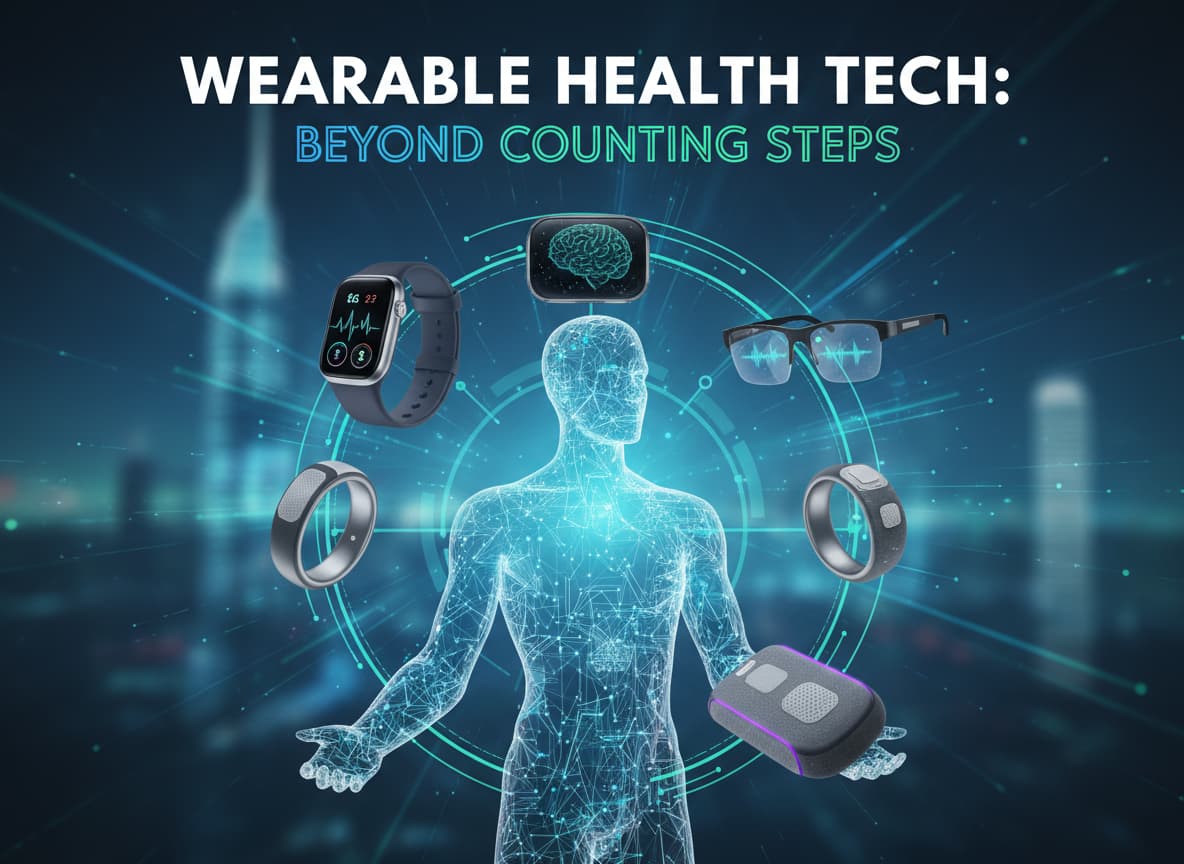
For years, buying a smartwatch or fitness tracker meant one thing: you wanted to count your steps. We obsessed over hitting that magical “10,000 steps” goal. We checked our wrists to see how many calories we burned during a run. It was fun, but it was mostly just a digital diary of our movement.
In 2025, that era is over. The device on your wrist (or your finger) is no longer just a fitness accessory. It has become a powerful medical guardian.
Today’s wearable technology does not just look at what you did yesterday. It predicts how you will feel tomorrow. From detecting hidden illnesses to managing stress levels in real-time, these gadgets are changing the way we live.
Here is how wearable health tech has evolved beyond simple step counting and why it matters for your future.
1. The Rise of “Invisible” Health Trackers
For a long time, if you wanted to track your health, you had to wear a bulky watch. It was uncomfortable to sleep with, and it didn’t look good with a nice suit or dress. Now, the technology has disappeared into jewelry we already wear.
Smart Rings have become the star of 2025. Devices like the Oura Ring 4 and the Samsung Galaxy Ring are leading this charge. These tiny rings are packed with sensors that sit close to your skin. Because they don’t move around as much as a watch, they often gather better data on your heart rate and body temperature.
People love them because they are “set and forget.” You slip the ring on, and it quietly tracks your sleep stages, recovery, and energy levels without distracting you with screens or notifications. It is health tracking that feels invisible.
2. Your Device Knows You Are Sick Before You Do
Imagine waking up feeling fine, but your phone tells you to take it easy because you are about to get the flu. This is no longer science fiction; it is a standard feature in high-end wearables like the Apple Watch Series 11 and Garmin Venu 3.
These devices use Artificial Intelligence (AI) to learn your “baseline.” They know your normal body temperature, your resting heart rate, and your breathing rate.
When something changes—even slightly—the device notices. If your temperature spikes by one degree overnight or your heart rate variability (HRV) drops, it sends you an alert. This “Readiness Score” helps you decide if you should go for that heavy gym session or if you should stay home and rest. In 2025, your watch acts like an early warning system for your immune system.
3. Mental Health and Stress Management
Physical health is only half the picture. The biggest leap forward this year has been in tracking mental wellness.
Older trackers could only guess if you were stressed. New devices use advanced EDA (Electrodermal Activity) sensors. These sensors measure tiny amounts of sweat on your skin to detect “micro-stress” moments throughout the day.
If your smart bracelet senses you are getting tense during a meeting, it might vibrate gently and suggest a 30-second breathing exercise. Some apps now use voice analysis to detect changes in your mood. They act as a digital therapist, checking in on you when they notice signs of anxiety or burnout. It is proactive care for your mind, not just your body.
4. Managing Chronic Diseases Without Needles
For millions of people with diabetes or high blood pressure, wearable tech is a lifesaver.
In the past, checking blood sugar meant pricking your finger multiple times a day. New Continuous Glucose Monitors (CGMs) and smartwatches are changing this. While medical-grade patches are still the most accurate, consumer watches are getting better at non-invasive monitoring. They use light sensors to estimate blood sugar and blood pressure trends.
This allows patients to see how a specific meal affects their body instantly. Instead of visiting a doctor once every three months, patients have a 24/7 view of their condition. This constant stream of data helps prevent emergencies before they happen.
5. The Era of Smart Clothing
Why wear a gadget when your shirt can do the work? Smart Clothing is the next frontier that is finally hitting the mainstream.
Athletes are now wearing shirts and shorts with sensors woven directly into the fabric. These “e-textiles” can measure:
- Muscle activity: Seeing which muscles you are using during a workout.
- Posture: Vibrating gently if you slouch at your desk.
- Heart Rate: Getting a medical-grade reading without a chest strap.
This is especially useful for elderly people. Smart socks can detect changes in walking patterns that might signal a risk of falling. It allows older adults to live independently for longer, knowing their clothes are keeping an eye on them.
6. Your Doctor is Connected
The most important change in 2025 is that your data doesn’t just stay on your phone. It connects to your doctor.
With your permission, your wearable can send reports directly to your medical records. If your Fitbit or Pixel Watch detects an irregular heart rhythm (Arrhythmia), it can email a report to your cardiologist automatically.
Insurance companies are also joining in. Many now offer “Rewards Programs.” If you share your activity data and prove you are living a healthy lifestyle, they might lower your monthly premiums or give you cash back. It is a win-win: you get healthier, and you save money.
Conclusion
We have come a long way from the simple pedometers of ten years ago. Wearable technology in 2025 is not just about fitness; it is about longevity.
These devices have become silent partners in our lives. They watch over our hearts while we sleep, calm us down when we are stressed, and warn us when we are getting sick. They empower us to understand our own bodies in ways that were impossible before.
So, the next time you put on your smartwatch or ring, remember: it is doing a lot more than just counting your steps. It is helping you live a longer, happier life.












Post Comment